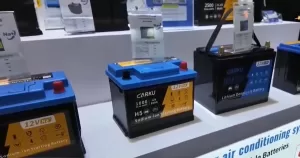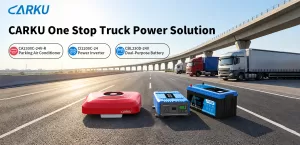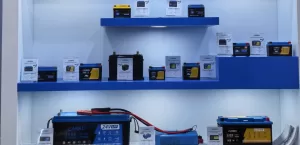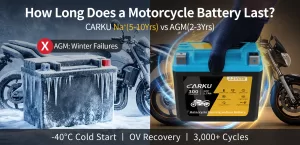

Sodium-ion automotive batteries can replace lead-acid batteries, but distributors should verify voltage, battery size, and cranking power before switching.
Can Sodium-Ion Automotive Batteries Replace Lead-Acid Starter Batteries?
Yes, sodium-ion starter batteries can replace lead-acid batteries, provided that the chosen battery matches the specific vehicle’s requirements. Note that this article focuses on low-voltage batteries used for engine starting, rather than high-voltage traction batteries used in electric vehicles (EVs).
To determine whether a direct replacement is viable, you cannot rely solely on Ah capacity. You must also evaluate cranking power, voltage and charging compatibility, as well as physical dimensions, terminal layout, and mounting methods.
For vehicles equipped with Start-Stop technology, it is equally essential to verify whether the candidate product is specifically rated for Start-Stop applications.
Ultimately, replacement suitability must be evaluated down to the specific vehicle model and battery specification. Physical fit is part of that assessment. The selected sodium-ion automotive battery should match the vehicle’s battery tray, hold-down arrangement, terminal layout, and available cable reach; matching Ah alone does not establish compatibility.
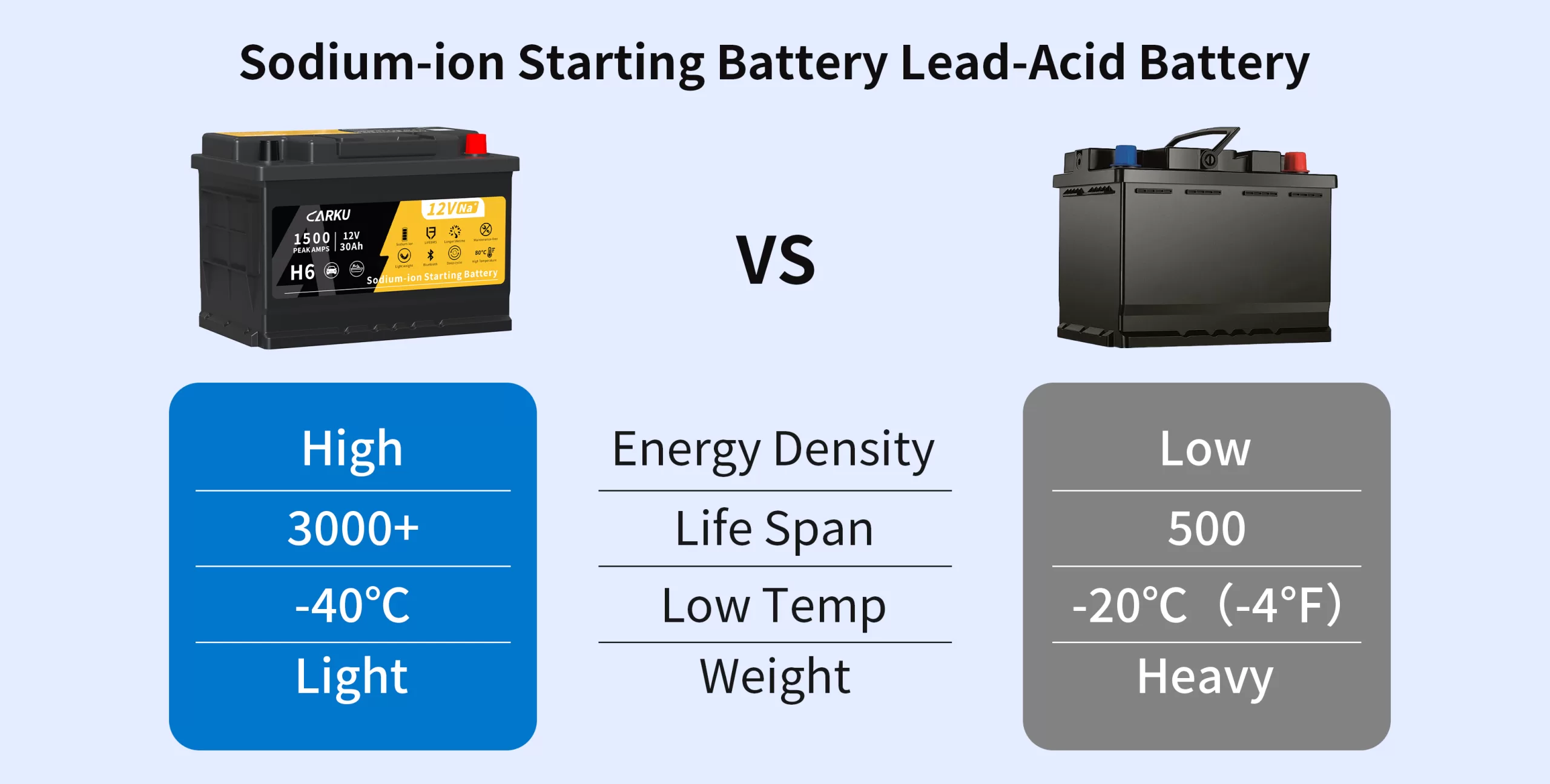 A side-by-side comparison showing how the sodium-ion battery outperforms conventional lead-acid batteries
Sodium-Ion vs. Lead-Acid Automotive Batteries: What Should You Compare?
Drivers and battery distributors considering sodium-ion automotive batteries need more than a list of potential benefits. The practical question is whether a specific sodium-ion starter battery can meet the vehicle’s requirements and offer sufficient value compared with the lead-acid battery it would replace.
Compare the two options across the following areas:
| Comparison area | What to check before choosing a replacement |
| Starting performance | Compare documented cranking performance under comparable test conditions, including the temperatures relevant to the vehicle’s operation. A high Ah rating alone does not demonstrate starting capability. |
| Capacity and vehicle power needs | Review rated capacity and available discharge data against the vehicle’s starting and engine-off electrical requirements. Do not assess the replacement on cranking output alone. |
| Cycling and discharge limits | Request cycle-life test conditions, discharge limits, and protection and recovery instructions. Avoid treating a published cycle count as a guaranteed service life in a vehicle. |
| Weight | Compare the complete batteries being considered, including their cases and integrated electronics, rather than relying on general claims about battery chemistry. |
| Purchase and ownership costs | Compare purchase price, installation requirements, any additional equipment, and supported replacement-cost assumptions. Identify which costs are known and which remain estimates. |
| Warranty and support | Check the warranty period, approved applications, exclusions, claim procedure, and availability of replacement support. |
For buyers seeking to reduce their use of lead-based products, material composition can be an additional consideration. However, that preference should not replace the performance, compatibility, cost, and support checks above.
A sodium-ion battery should not be selected simply because it uses a newer chemistry. Where the documentation supports further evaluation, complete the compatibility checks first, then assess the candidate against the existing lead-acid battery using defined performance and cost criteria.
Are CARKU Sodium-Ion Automotive Batteries a Drop-In Replacement?
Battery replacement is not only about chemistry. One capacity can come in different case sizes. For example, CARKU 30Ah sodium-ion battery may be made in H5 or H6 style sizes, while a 40Ah option may be made in H7 or H8 style sizes. This helps one sodium-ion model fit several lead-acid battery sizes, but the tray and hold-down still need to be confirmed.
Terminal type also matters. Some vehicles need DIN terminals. Others use a general terminal type. If the terminal is wrong, installation may be unsafe or impossible without changes.
Before placing sodium ion batteries for sale into a distribution channel, confirm:
- case size and hold-down position;
- positive and negative terminal layout;
- DIN or general terminal type;
- cable reach and clearance;
- hood and tray space.
A correct fit improves customer satisfaction and reduces returns.
FAQs
1. How does a BMS protect a sodium-ion starter battery?
A BMS monitors and controls battery operation within defined limits. Depending on its design, it can help protect against over-voltage, over-current, over-temperature, and cell imbalance. The BMS should be designed to suit the battery cells, pack configuration, and intended vehicle application.
2.What are the limitations of replacing lead-acid starter batteries with sodium-ion batteries?
Potential limitations include a higher upfront purchase price, lower energy density than many lithium-based batteries, and charging-system compatibility requirements for certain vehicles. Suitability depends on the specific battery design and vehicle application, so buyers should verify technical specifications and conduct practical testing before switching.