
For most riders, the answer is 2–3 years, but only if winter cold, short rides, and long periods of storage don’t cut it short first. Cold-start failures and dead batteries after the off-season are among the most common reasons riders end up back at the shop, and the problem often isn’t the motorcycle at all.
In this guide, we’ll break down what really determines motorcycle battery life, and what sodium-ion (Na+) technology changes.
What shortens A Motorcycle Battery?
Traditional AGM batteries often fail after temperature extremes, short rides, and weeks of storage. Even with the ignition off, a motorcycle draws a small amount of power, so a parked bike slowly drains its battery.
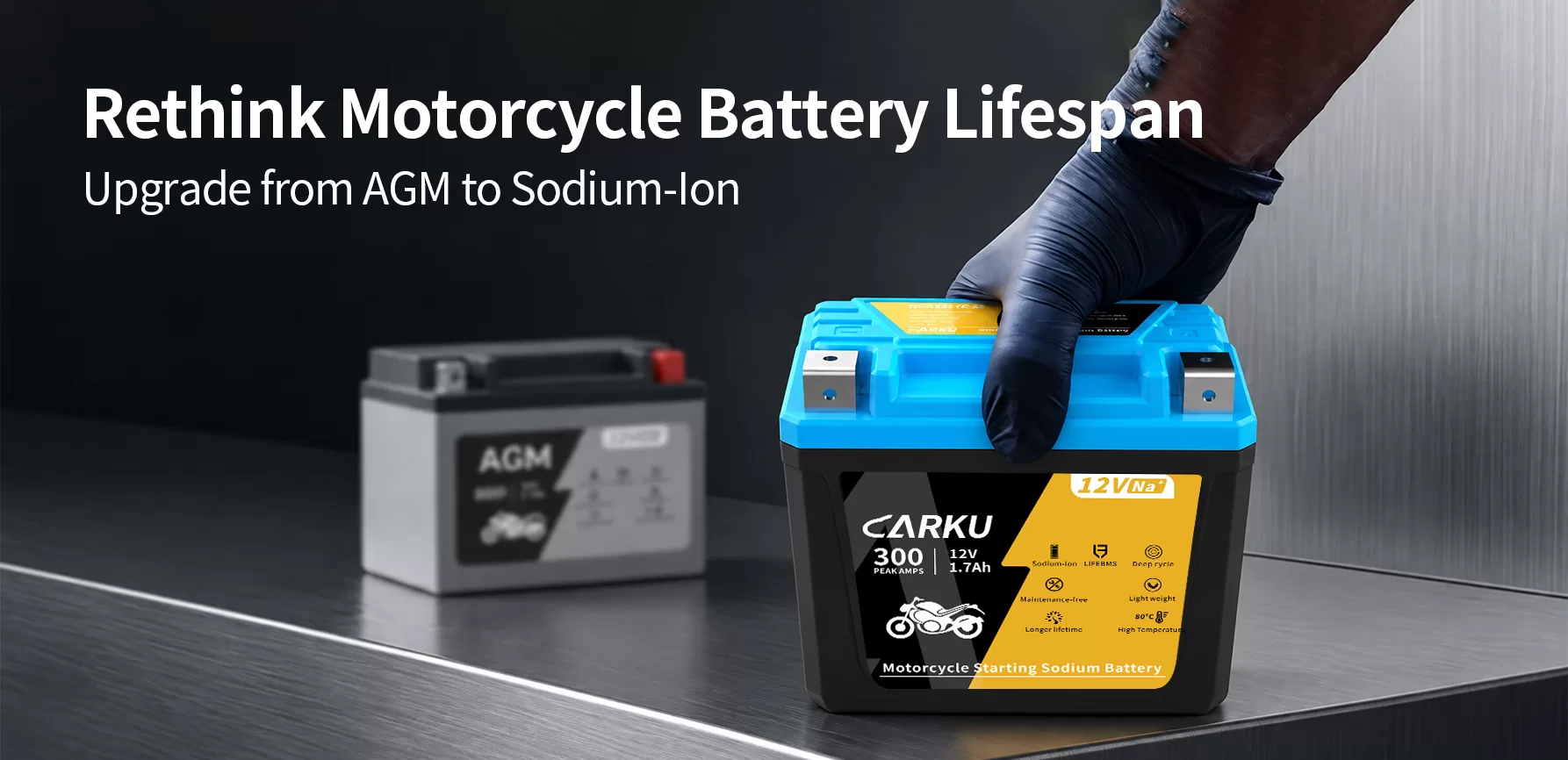 Image info: comparing a generic AGM battery with the CARKU Na+ motorcycle battery, emphasizing 5-10 years lifespan and 3,000+ cycles
What lasts longer: AGM or sodium-ion (Na+) motorcycle batteries?
Battery chemistry largely determines how long a motorcycle battery lasts: AGM typically delivers 2–3 years, while sodium-ion (Na+) is designed for 5–10 years and 3,000+ cycles.
Most motorcycles today use AGM batteries. Compared with conventional batteries, AGM is sealed, handles vibration better, delivers more stable power, and needs less upkeep, which suits typical riding conditions.
Sodium-ion (Na+) motorcycle batteries, such as CARKU, are designed to go further. They keep 80%+ discharge efficiency at -40°C and can be recharged after discharge to 0V, which addresses two common causes of early failure: winter cold and deep discharge.
FAQs
1.Should I choose an AGM or a sodium-ion (Na⁺) motorcycle battery?
AGM batteries cost less upfront and suit occasional riders in mild climates. Sodium-ion (Na+) motorcycle batteries suit riders who face cold winters, ride irregularly, or want fewer replacements, with a design life of 5–10 years versus 2–3 years for AGM. Check that the size, terminal layout, and CCA match your bike before buying.
2.What should I do if my motorcycle won’t start in winter?
Cold slows the chemical reaction inside a battery while the engine needs more power to turn over,so check the voltage with a multimeter. A healthy 12V battery rests near 12.6V; a reading below about 12.0V means it needs charging. Next, clean and tighten the terminals, since corroded or loose connections add resistance and waste power. Then charge the battery fully and avoid cranking longer than a few seconds at a time.
3.Can a sodium-ion motorcycle battery explode or catch fire?
Sodium-ion chemistry is generally considered to have a lower thermal-runaway risk than lithium-ion.Unlike AGM batteries, it contains no liquid acid that can leak or corrode the bike’s wiring and frame. AGM batteries, in turn, can vent hydrogen gas if overcharged.
4.Can a deeply discharged motorcycle battery be revived?
AGM batteries often suffer permanent damage after deep discharge. CARKU sodium-ion batteries can be recharged after discharge to 0V, according to CARKU lab data.