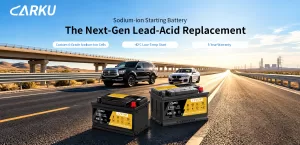

Drivers are increasingly shocked by modern car battery replacement costs, with many AGM and starting battery replacements now reaching $200–$400 including installation and diagnostics. From advanced vehicle electronics and battery registration to newer lithium and sodium-ion battery technologies, replacing a car battery today is far more complex than it was a decade ago.
Why Modern Car Electronics Complicate Battery Replacement
Most drivers expect to pay for a battery, but what they’re really paying for is a service.
Starting batteries do carry higher material and technology costs than conventional units—but that’s only part of the story. The larger driver is how deeply modern vehicles integrate battery data into their electronic systems. The ECU, Battery Management System, and start-stop modules all depend on accurate, real-time battery information to function correctly. When a battery is swapped without addressing these systems, the vehicle has no way to recognize the new unit—leading to warning lights, degraded performance, or a shortened battery lifespan.
This is why replacement now involves more than a physical install. The new battery typically needs to be registered or coded to the ECU so the charging algorithm can calibrate correctly. Technicians also perform diagnostics, sensor resets, and start-stop recalibration before the job is considered complete. Each of these steps requires specialized tools and trained labor.
That said, when weighed against the recurring expense of replacing a conventional lead-acid battery every one to two years—along with the disposal fees, repeat labor, and performance compromises that come with it—a single quality start-stop battery replacement tends to cost less over time, not more.
For drivers comfortable with the process, self-installation remains possible. But it is no longer as straightforward as it once was—understanding the correct procedure is essential to avoid triggering system errors. For those who prefer a reliable outcome, professional options including in-shop installation, mobile replacement, and roadside assistance handle the full process efficiently.
Battery replacement today is no longer just a parts swap. It’s a system-level service.
Can a Better Replacement Battery Save You Money
The honest answer is: it depends on where you drive, and how often things go wrong.
For drivers in regions with extreme heat—parts of Australia, the Middle East, Southeast Asia, or the American Southwest—conventional lead-acid batteries routinely fail ahead of schedule. Heat accelerates internal corrosion and plate degradation, which means a battery rated for four years may deliver two. Each early failure triggers the full replacement cycle again: a roadside assistance call, a tow if the vehicle won’t start, diagnostic fees, and labor. In high-temperature markets, that cycle can repeat every 18 months.
Cold climates carry a different cost. In Northern Europe, Canada, or highland regions, a weakened battery that starts fine in summer can fail completely on a winter morning. Roadside assistance callouts spike in winter months precisely because conventional batteries lose a significant portion of their cranking power below freezing. A single emergency callout—depending on the provider and location—can run anywhere from $80 to over $200, before any parts are touched.
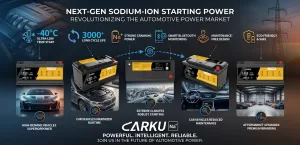
Lithium and sodium-ion starting batteries address both extremes more effectively than lead-acid chemistry can. Their stable electrochemical structure degrades less under sustained heat exposure, and their discharge characteristics hold up better in low-temperature conditions. Fewer weather-driven failures mean fewer emergency callouts, fewer unplanned replacement cycles, and less accumulated labor cost over the battery’s service life.
There’s also the maintenance variable. Traditional lead-acid batteries—particularly flooded variants—require periodic checks on electrolyte levels, terminal corrosion, and charge state. Each visit to a technician for a routine battery health check is a small cost that adds up across years. A zero-maintenance sodium-ion design removes that line item entirely.
Taken together, the upfront premium on a quality lithium or sodium-ion battery looks different when measured against what drivers in demanding climates are already spending to keep a cheaper battery running. The savings aren’t always visible on the invoice. They show up in the callouts that never happened.
How to Choose the Right Replacement Battery for Cars
Choosing a replacement battery today is less about picking a type and more about matching the battery to the vehicle’s electrical demands and usage conditions. With options like flooded lead-acid, AGM, lithium-ion, and sodium-ion, the key is ensuring compatibility with your vehicle’s voltage requirements, start-stop system, and operating environment.
For most drivers and workshops, the first priority is fitment and system compatibility. Check group size, cold cranking amps (CCA), reserve capacity, and whether the battery supports start-stop operation if equipped. Using a battery that does not match the vehicle’s energy management system can lead to charging issues or reduced lifespan.
Beyond specifications, consistency of manufacturing matters. Batteries produced under stable quality control systems are more likely to deliver predictable performance over time. This is especially relevant for fleet operators, where uneven battery quality increases maintenance frequency and downtime.
For commercial buyers or distributors, supplier capability becomes a practical consideration. Manufacturers with OEM or ODM experience can provide batteries aligned with specific vehicle requirements or regional standards, which is important for scaling procurement across different markets.
In cross-border scenarios, verified certifications and export compliance help avoid delays and ensure the product meets regulatory requirements. At the same time, accessible technical documentation and after-sales support reduce installation errors and simplify warranty handling.
In practice, the right battery is not just one that fits physically—it must integrate electrically with the vehicle system and be supported by reliable manufacturing and documentation.
FAQs
1. How Do You Install a Car Sodium-Ion Starting Battery?
Confirm voltage compatibility and start-stop support, connect terminals with correct polarity, then complete ECU registration via diagnostic tools. The CARKU Battery App can then be used to monitor battery health, charge state, voltage, and cycle life post-installation.
2. How Does a Starting Battery App Work?
The app connects via Bluetooth or a built-in module to provide real-time monitoring of charge state, voltage, and battery health. Some systems include remote diagnostics and long-term performance tracking, making battery management accessible directly from a smartphone.
3.How Do Starting Batteries Perform in Cold Weather?
Sodium-ion chemistry offers stronger cold-start stability and better low-temperature storage tolerance than conventional chemistries. Performance does reduce below 0°C, and charging should stay within recommended temperature ranges. These characteristics make sodium-ion batteries well-suited for cold-climate markets including Canada, Northern Europe, and Russia.