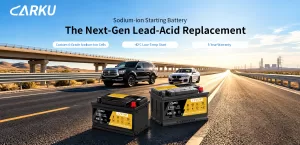

Looking for the best starting battery? Compare LiFePO4, sodium-ion, lead-acid, and AGM options by CCA, group size, and vehicle type — with real examples like the Land Cruiser H8 battery.
What Is a Starting Battery?
A starting battery is designed to deliver the high current needed to crank and start a vehicle’s engine. A dual-purpose starting battery is a more precise term — it can both start the engine and supply power to portable equipment, such as a cook stove, making it especially practical for fleet vehicles or in situations where the engine struggles to start.
What to Look for When Choosing a Starting Battery?
Choosing a starting battery is easier when you understand a few key specifications before shopping.
1. The higher the CCA rating, the easier it is to start an engine in low-temperature conditions.
2. Common group sizes include H6, H7, H8, Group 48, Group 49, and L5. Group size is closely related to voltage selection when choosing the right battery for your vehicle.
3. Battery chemistry determines the battery’s lifespan, weight, performance, and overall behavior under various conditions.
Many vehicle owners simply replace the original battery installed by the manufacturer. While this works, OEM batteries are often among the most expensive options and may not provide the best value. Today, there are many compatible replacements available, including LiFePO4, and sodium-ion batteries.
Before comparing battery chemistry, identify your vehicle’s requirements. First and foremost: How do you choose the right CCA?
How to Choose the Right CCA for Your Vehicle?
For example, an H8 battery (also referred to as Group 49 or L5 in different markets) is commonly used in high-end / premium SUVs. For many modern passenger cars, SUVs, batteries in the 1000–1200 CCA range can be a useful starting point when narrowing down replacement options.
Understanding CCA range provides strong cranking performance, which can help you find good replacement battery options without being limited to the original battery.
Which Battery Type Is Best?
The best starting battery depends on how and where your vehicle is used. For most modern drivers and fleet operators, LiFePO4 and sodium-ion batteries represent the next generation of starting power, offering significant advantages over traditional lead-acid and AGM batteries.
For Fleet Operators and Long-Haul Trucks: LiFePO4 Starting Battery Is the Best Choice
If your goal is to reduce operating costs and maximize battery lifespan, a LiFePO4 starting battery is often the best solution.
Unlike traditional starting batteries, LiFePO4 batteries can not only start the engine but also provide auxiliary power for equipment such as parking air conditioners, refrigerators, lighting systems, and onboard appliances. Their long cycle life, lightweight design, and maintenance-free operation help fleet owners lower fuel costs, reduce battery replacements, and improve overall vehicle efficiency.
For Extreme Cold Climates: Sodium-Ion Starting Battery Is the Best Choice
For vehicles operating in regions with harsh winters, a sodium-ion starting battery offers the greatest advantage.
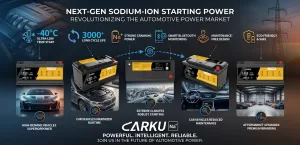
Sodium-ion technology delivers excellent low-temperature performance and reliable cranking power even at temperatures as low as -40°C (-40°F). This makes it particularly suitable for vehicles operating in cold regions such as Finland, Norway, Sweden, Canada, and other northern markets where conventional batteries often struggle to start engines in winter conditions.
For Budget-Conscious Drivers: Lead-Acid and AGM Remain Practical Options
Traditional lead-acid and AGM batteries continue to be widely used because of their lower upfront cost and broad vehicle compatibility. However, they are heavier, typically have a shorter service life, and require more frequent replacement. As vehicle electrical demands continue to increase, many drivers are upgrading to LiFePO4 or sodium-ion batteries for better performance, longer lifespan, and reduced maintenance.
· Best for trucks, fleets, and auxiliary power needs: LiFePO4 Starting Battery
· Best for extreme cold-weather starting: Sodium-Ion Starting Battery
· Best for the lowest initial purchase cost: Lead-Acid or AGM Battery
As battery technology evolves, LiFePO4 and sodium-ion batteries are becoming the preferred replacements for traditional lead-acid and AGM batteries, delivering longer service life, lighter weight, and better performance for today’s vehicles.
FAQs
Q1. What to look for when looking for a starting battery?
Start by identifying your vehicle type and its voltage requirement. 12V batteries are typically used in standard cars and SUVs, while 24V batteries are more common in trucks and heavy-duty vehicles — use these as your first filter when browsing options.
Next, consider battery chemistry:
LFP (Lithium Iron Phosphate) batteries are well-suited for both engine starting and auxiliary power supply.
Sodium-ion batteries are primarily used for engine starting purposes.
Q2. What is the best battery for Land Cruiser in 2026?
The recommended option is an H8 battery, also known as L5 in certain markets. Its dimensions are fully compatible with the Land Cruiser’s battery compartment — simply slide it into place and the vehicle is ready to start.