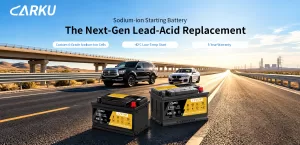

Lead-acid batteries have powered cars for decades, but newer options like LiFePO4 and sodium-ion are redefining the gold standard for vehicle reliability. If you care about reliability, cold-weather performance, lower maintenance, and long-term value, the next-gen ignition battery transition from lead-acid to solid-state alternatives is hard to ignore.
From AGM to Sodium-Ion: Why Traditional Lead-Acid Batteries Are Losing Their Edge
Lead-acid and AGM batteries still work for many vehicles, but they have well-known limits in lifespan, weight, and performance under demanding conditions. For drivers who want fewer replacements and more consistent starting power, newer chemistries are starting to look more practical. This is especially relevant for people searching for AGM battery drawbacks or comparing old and new battery technologies for everyday use.
LiFePO4 vs. Sodium-Ion Batteries: How New Chemistry Breaks the Performance Ceiling
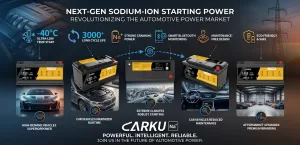
LiFePO4 batteries have become popular because they offer strong cycle life, stable performance, and built-in safety advantages when designed with proper BMS protection. Sodium-ion starting batteries are now entering the conversation too, especially for drivers who want a more sustainable option with good cold-weather potential and no dependence on scarce lithium materials. In real-world use, both technologies are challenging the idea that a traditional lead-acid battery is still the default choice.
Why a More Expensive Battery Can Be the Better Deal
The real question is not just the upfront price, but the total cost over time. While LiFePO4 carries a higher initial investment, it proves far more economical than budget-grade lead-acid alternatives that suffer from premature capacity fade and frequent ignition failures. For many vehicle owners, especially those managing fleets or relying on their vehicle daily, paying more once can make more financial sense than replacing a battery repeatedly.
A Real-World Switch From Lead-Acid to Lithium
Most drivers do not shop for batteries by chemistry alone. They care about whether the car starts reliably, whether the battery handles hot summers and cold mornings, and whether they can avoid another replacement too soon. That is why search interest keeps growing around terms like best LiFePO4 starting battery, safe for hybrid car, and is it worth replacing a hybrid car battery.
How to Identify the Right 12V Battery for Modern Start-Stop Systems
The best battery depends on the vehicle, climate, and usage pattern. If your priority is daily reliability, low maintenance, and long service life, LiFePO4 may be the best fit for many starting applications. If sustainability and cold-weather resilience matter more, sodium-ion is becoming an increasingly interesting alternative. The key is matching the battery technology to the actual driving environment, not just choosing the cheapest option.
FAQs
Q1: How long does a LiFePO4 12V car battery last?
A high-quality LiFePO4 battery can deliver thousands of charge cycles and often lasts far longer than a traditional lead-acid battery. This is especially critical for modern start-stop systems, where the battery must endure high-frequency cycling daily. For drivers who keep vehicles for years, that can mean fewer replacements and lower maintenance over the life of the car.
Q2: Is sodium-ion technology safe and sustainable?
Yes. Sodium-ion technology is designed around stable chemistry and uses more abundant raw materials than lithium-based systems. Beyond sustainability, its primary advantage in start-stop systems is its resilience; it maintains consistent starting power and superior high-frequency cycling performance even in extreme temperatures, making it a safer and more reliable option for diverse climates.
Q3: What defines a maintenance-free starting battery?
It means the battery does not require regular fluid checks, topping off, or the kind of routine upkeep associated with some older battery types. Unlike older battery types that require fluid checks or terminal upkeep, these batteries manage high-frequency cycling automatically via an integrated BMS. Once installed in a start-stop system, it is designed to deliver reliable performance with minimal attention.