
Discover why a modern car start stop battery must go beyond traditional designs. Learn how AGM and sodium-ion technologies impact cycle life, TCO battery costs, and long-term performance in start-stop systems.
What Is a Start-Stop Car Battery and How Does It Work?
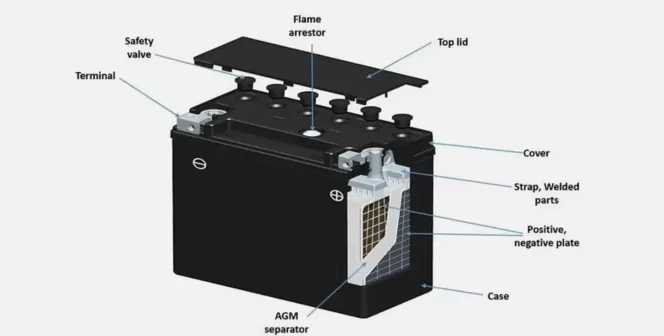
A start stop car battery is a next-generation automotive energy source engineered for vehicles with automatic engine start-stop systems—widely adopted in Europe, North America, and Asia-Pacific. Unlike conventional lead-acid options, this sodium-ion battery is designed to handle frequent engine restarts, high electrical loads, and deep cycling conditions with greater stability and longevity than a traditional start stop battery.
When your car stops, the engine shuts off—but your electronics stay on. At that moment, the car start stop battery takes over, powering everything from AC to your dashboard. As you brake, some energy is recovered and stored. When you move again, the battery delivers an instant burst to restart the engine.
This constant stop–start cycle puts heavy strain on a typical start stop battery, especially under partial charge conditions.
Now imagine your daily commute: you’re at a red light, engine off, AC running, phone charging. For most drivers, it feels routine—but for a conventional AGM battery, it’s a hidden stress test.
CARKU’s sodium-ion battery is built for exactly this scenario, delivering stable, uninterrupted power without voltage drops, ensuring smoother performance and longer battery life.

Why Frequent Start-Stop Cycles Destroy a Standard Car Battery Faster
Frequent start-stop cycles wreak havoc on a standard car battery, accelerating its demise through relentless daily abuse. Imagine firing up your engine 20–50 times a day—common in stop-and-go city traffic or short trips—each jolt demanding a massive surge of power that drains the battery deeply before it can fully recharge. This high-frequency punishment traps the battery in a partial state of charge (PSOC), where it lingers in a half-charged limbo for hours or days, fostering sulfate crystal buildup on the plates that stiffens them and slashes capacity over time. Compounding the issue, these cycles trigger deep cycling losses, as the battery repeatedly dips into its reserves without adequate recovery, causing irreversible warping of the lead plates and electrolyte degradation. Ultimately, a standard car battery fails faster than expected, often needing a replacement car battery well before its rated lifespan in such demanding conditions.
The Hidden Cost of Replacing a Start-Stop Car Battery Too Often
TCO battery expenses skyrocket when you’re stuck replacing a start-stop system battery every year or so, turning what seems like a quick fix into a budget black hole. Labor costs alone pile up fast—at $100–200 per swap, plus diagnostic fees—while your car sits idle in the shop, costing you hours of parking fees, missed rideshares, or lost wages from downtime. Frequent replacement car battery installs amplify vehicle stoppage risks, stranding you unexpectedly and inflating towing bills or rental car needs during those vulnerable periods right after a change. These hidden tallies—parts, service, and inconvenience—dwarf the upfront price, proving that a cheap battery equals expensive in the long run, especially when smarter alternatives like sodium-ion tech promise durability without the drain.
What Makes a Car Start-Stop Battery Truly Compatible with Modern Vehicles?
When drivers hunt for an agm car battery replacement to revive their start-stop equipped ride, they’re zeroing in on a smart upgrade tailored for the rigors of modern vehicles. AGM tech shines here with its absorbent glass mat design that handles high-rate discharges from endless engine restarts, resists vibration better than flooded batteries, and supports faster recharges during brief idle phases—making it the go-to start stop battery for seamless compatibility. It outperforms standards by enduring more cycles without spilling acid or losing water. AGM is an improvement—but not the final solution, as its lifespan still caps out prematurely under extreme use, performance dips sharply in cold weather due to sluggish electrolyte flow, and recharge times lag behind demands in ultra-frequent stop-go scenarios.
AGM vs Sodium-Ion Car Battery: Which Lasts Longer in Start-Stop Systems?
Not every battery is built for the high-frequency demands of modern start-stop driving. Each time the engine shuts off at a red light and restarts, the system triggers another charge-discharge cycle—dozens per day, thousands per year. For traditional AGM batteries, this continuous cycling accelerates degradation.
The core issue lies in how AGM batteries are designed. They were built for stable charging conditions, yet start-stop systems keep them in a partial state of charge (PSOC). Under these conditions, sulfation builds up, capacity declines, and within 3 to 4 years, they often struggle to reliably support vehicle systems.
A sodium-ion car battery changes this equation. Its chemistry remains stable under PSOC conditions, meaning repeated cycling does not trigger the same degradation. In real-world start-stop driving—not in lab testing, but in daily traffic—its sodium ion battery cycle life is significantly longer than AGM.
Beyond durability, the performance gap becomes even more apparent in two critical areas. First, charge acceptance: when braking energy is recovered, a sodium-ion car battery absorbs it quickly and efficiently, while AGM performance declines over time. Second, output stability: AGM voltage tends to fluctuate under repeated high-load demands, whereas sodium-ion technology maintains consistent power delivery during every restart cycle, helping protect sensitive vehicle electronics.
The difference is clear. AGM was once the best available solution for early start-stop systems. Today, a sodium-ion car battery delivers longer sodium ion battery cycle life, faster energy recovery, and stable performance that does not degrade with every stop and go.
Table info: AGM vs Sodium-ion
| Feature | AGM Battery | Sodium-Ion Car Battery |
| Cycle Life | Limited (3–4 years) | 3× longer lifespan |
| PSOC Performance | Degrades quickly | Highly stable |
| Charge Acceptance | Declines over time | Fast & efficient |
| Energy Recovery | Partial / inefficient | High efficiency |
| Voltage Stability | Fluctuates under load | Consistent output |
| Real-World Driving | Performance drops in traffic | Built for stop-start cycles |
Why Start-Stop Car Batteries Fail in Cold Weather—and How to Fix It
Winter bites hard into car start stop battery performance, turning routine cold starts into frustrating failures when temperatures plummet to -20℃ across North America or Europe. Traditional lead-acid designs stiffen up in the freeze, with electrolyte thickening that spikes internal resistance, slashes cranking amps, and leaves you stranded amid morning frost or snowy commutes—common woes in harsh winters where engines refuse to turn over despite a full charge. Sodium ion car batteries for cars flip the script entirely, thriving in these extremes thanks to their stable chemistry that shrugs off sub-zero chills without capacity loss or voltage drops. Where traditional car start stop battery fails, sodium-ion continues to operate reliably, delivering consistent power for effortless starts even in the depths of winter.
CARKU Sodium-Ion Car Batteries: A Smarter Upgrade for Modern Drivers
Modern driving demands more than just a traditional power source—it requires reliability, durability, and efficiency under real-world conditions. This is where the na ion battery stands out as a next-generation solution built for today’s vehicles.
Unlike conventional systems that degrade under frequent start-stop cycles, CARKU’s technology translates advanced chemistry into practical performance. Each sodium-ion car battery is engineered to deliver longer service life, consistent power output, and minimal maintenance, making it a dependable choice for passenger cars, trucks, and motorcycles.
Safety is another critical advantage. With improved thermal stability and resistance to over-discharge, the na ion battery ensures stable operation even in demanding environments such as extreme temperatures or high-load usage. This not only protects the battery itself but also safeguards sensitive onboard electronics.
For drivers seeking a smarter upgrade, the choice is clear. A sodium-ion car battery offers a future-ready alternative—combining durability, efficiency, and sustainability into one reliable energy solution.
In Conclusion
As emphasized throughout this guide, the difference is not just technical—it is practical. Longer lifespan, faster energy recovery, and reliable output mean fewer replacements, lower total cost of ownership, and greater peace of mind on the road.
A sodium-ion car battery is no longer just an upgrade—it is becoming the new standard for start-stop performance.