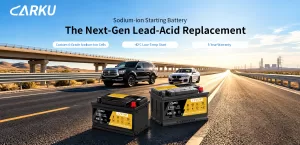

When your car struggles to start—especially in cold conditions—choosing the right starting battery matters. Compare LiFePO4 and sodium-ion starting batteries to find the best cranking power for your vehicle.
Battery Choice Matters More Than You Think
Choosing the right vehicle starting battery isn’t just about fitting the terminal size—it’s about ensuring your car fires up instantly under all conditions. Temperature swings, engine size, and even driving habits can dramatically affect starting performance.
Traditional lead-acid batteries often struggle under extreme conditions, but new battery technology like LiFePO4 starting batteries and sodium-ion starting batteries promise stronger cold cranking amps (CCA), faster voltage recovery, and greater longevity. Whether you drive a motorcycle, sedan, or truck, understanding these differences helps avoid the dreaded “car won’t start” moment on a freezing morning.
What Happens When Your Car won’t start?
A slow cranking sound or an unresponsive ignition usually points to more than a worn-out battery—it often reveals how chemistry affects performance in different environments. Cold temperatures thicken engine oil and increase internal resistance inside a battery, demanding higher cranking current.
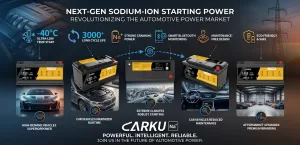
When a LiFePO4 battery or sodium-ion battery delivers current at -20°C or below, the consistency of its voltage output determines whether your car starts smoothly. Sodium-ion batteries, built for durability from -40°C to 80°C, perform admirably in both winter frost and desert heat. However, in heavier vehicles or diesel engines, LiFePO4 batteries tend to outperform because of their exceptional current output and stable discharge curve under high-load ignition.
Sodium-Ion vs LiFePO4: How Cranking Power Works
Below is a comparison based on your product data for two representative batteries — the CBN1230 Sodium-Ion and CBL24230-2 LiFePO4 models — both designed for vehicle starting under demanding conditions.
| Feature | Sodium-Ion (CBN1230) | LiFePO4 (CBL24230-2) | User Experience Impact |
| Peak Cranking Current (CCA) | 1000A | 2500A | LiFePO4 provides stronger ignition for large engines |
| Voltage | 12V | 25.6V (24V system) | LiFePO4 ideal for trucks and heavy-duty setups |
| Operating Temperature | -40°C to 80°C | -40°C to 60°C | Both excellent in cold start; sodium-ion more heat tolerant |
| Nominal Capacity | 30Ah | 230Ah | Truck-ready LiFePO4 handles bigger loads |
| Cycle Life | 3000 cycles | 3000 cycles | Equal longevity, lower maintenance |
| Weight | 4.5kg | 41kg | Sodium-ion suits small vehicles and motorcycles |
| Chemistry | Sodium | LiFePO4 | Sodium = eco-friendly; LiFePO4 = high-performance |
| Smart Features | Bluetooth, heating support | Bluetooth, heating support | Intelligent monitoring improves reliability |
Both technologies excel in cold start performance, yet LiFePO4’s higher power density allows faster cranking and recovery for large displacement or Start-Stop vehicles, while sodium-ion’s thermal stability and sustainable chemistry make it a stronger environmental choice.
When Is It Time to Replace Your Car Starting Battery?
When your vehicle begins showing signs such as slow engine start, weak cold performance, frequent Start-Stop failures, or dashboard warnings about low charge, your starting battery is nearing its performance limit.
Vehicles equipped with Start-Stop systems demand rapid voltage stabilization and robust cycle endurance. Continuing to use a degraded battery risks ignition failure, electronic instability, and reduced fuel efficiency. That’s why Starting Battery Replacement should happen early—and it’s best to choose a LiFePO4 or sodium-ion battery specifically designed for high cranking amps, fast recharge, and resistance to cold-weather voltage drops.
A new generation of Start-Stop compatible batteries isn’t just a convenience—it’s a safeguard for your vehicle’s entire electrical ecosystem.
Frequently Asked Questions:
Q1. What Are the Benefits of a Car Starting Battery?
A1. Modern starting batteries offer rapid cranking power, stable voltage under cold conditions, and extended cycle life. LiFePO4 and sodium-ion types deliver stronger and cleaner energy compared to lead-acid options.
Q2. What Certifications Should a Car Starting Battery Have?
A2. Look for international certifications such as UN38.3, UL, PSE, CE, RoHS and FC that validate safety, capacity, and high-discharge performance.
Q3. How Can I Tell If My Car Battery Is Failing to Start the Vehicle?
A3. If your car struggles to start, the engine cranks slowly, or your start-stop system disables itself automatically, the battery may be past its prime. Voltage drop during ignition (below 10V) is another key indicator.